The White House functions as both an active center of government and a living museum, blending daily political life with centuries of American art, architecture, and public ritual. That dual role creates a unique visitor experience and an ongoing preservation challenge: how to maintain historic character while supporting the needs of a modern presidency.
Architecture and design
At its core, the White House balances classical design with layered adaptations.
The Executive Residence, West Wing, and East Wing each reflect different uses: private living quarters, executive offices, and ceremonial or staff space. Architectural details — from neoclassical columns to period interior furnishings — tell a story of evolving tastes and practical updates.
Many rooms retain historic palettes and decorative schemes chosen to reflect national identity and hospitality, while behind the scenes modern systems for climate control, accessibility, and security are integrated to protect both occupants and historic fabric.
Art, objects, and curatorship
The White House holds a significant collection of American and European painting, sculpture, decorative arts, and historic furnishings. Professional curators work with the White House Historical Association and preservation teams to manage acquisitions, conservation, and rotating displays. Every textile, portrait, and china pattern is chosen for historical resonance and ceremonial utility, often reflecting themes that tie to public diplomacy and national storytelling.
Exhibitions and special displays are sometimes coordinated with state visits, public events, or official commemorations, reinforcing the White House’s role as a venue for cultural diplomacy.
Gardens and public landscape
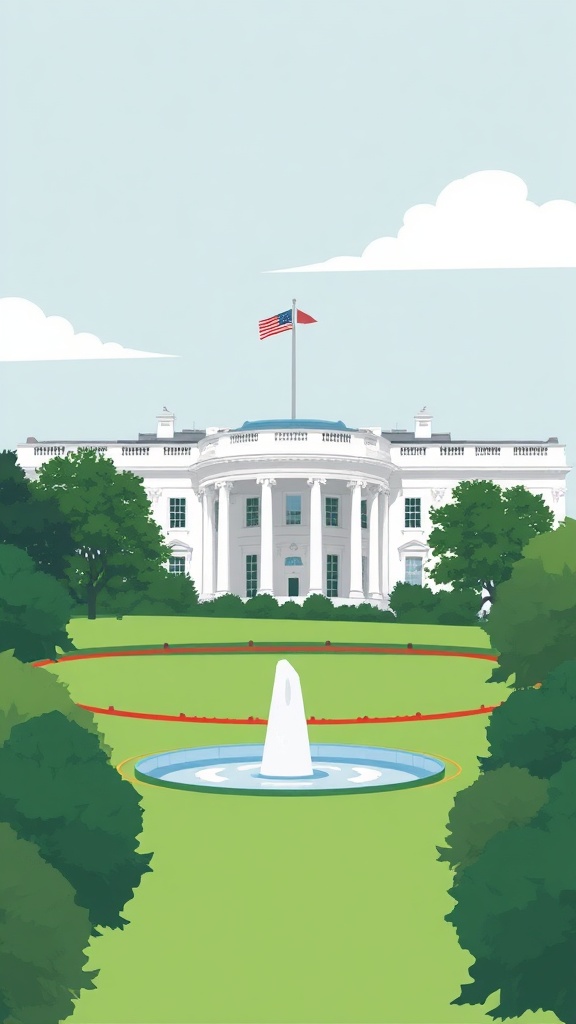
The grounds — from the iconic North Lawn to the intimate Rose Garden and larger South Lawn — serve functional, symbolic, and environmental roles. Gardens are carefully designed for formal ceremonies, press events, and private enjoyment, as well as for biodiversity and stormwater management. Recent preservation work has emphasized planting schemes that honor historical layouts while incorporating native species, sustainable maintenance practices, and pollinator-friendly plantings.
Garden spaces are frequently used for press conferences, state arrival ceremonies, and public receptions, reinforcing their role as both stage and sanctuary.
Public access, tours, and transparency
Public engagement is a longstanding feature. Guided tours, educational programming, and public events provide direct access to parts of the White House and its story. Because the building operates simultaneously as a residence and workplace, access is managed carefully to balance security with openness. Visitor programs often involve partnerships with civic organizations and local representatives to facilitate educational outreach and historical interpretation.
Preservation challenges
Maintaining an occupied historic building presents complex conservation questions. Everyday wear, climate control needs, and evolving accessibility standards require ongoing intervention from architects, conservators, and engineers. Preservation priorities include stabilizing historic fabric, preventing deterioration of artworks and textiles, and upgrading mechanical systems in ways that minimize visual impact. Decisions are guided by the principle that the building should remain functional for official duties while preserving its historic character for future generations.
Why it matters
The White House is more than a political headquarters; it’s a symbol where national identity, history, and public life intersect. Efforts to preserve its architecture, collections, and landscapes reflect a broader commitment to keeping the story of civic life accessible and relevant. For visitors and citizens, the White House offers a chance to connect with the rituals and spaces that continue to shape public life, even as those spaces adapt to contemporary needs.
For the most current information on visiting or programming, check official channels and partner organizations that manage tours and educational initiatives.
Leave a Reply